Garden Consultation Bristol for Better Gardens

A garden consultation Bristol homeowners arrange before committing to a major project should feel far more useful than a quick walk around the lawn. It is the point where an awkward slope, a tired patio or an unused corner begins to make sense as part of a garden built around your life.
Perhaps the garden needs to work harder for a growing family. Perhaps you want somewhere to cook and entertain well into the evening, a private space to switch off, or a garden room that gives you a proper office or gym. The right conversation brings those ambitions together with the practical realities of the site, so the finished space is not only impressive on day one but a pleasure to use for years.
A Garden Consultation in Bristol Starts with Real Life
The best garden designs do not begin with a particular paving slab, pergola or planting scheme. They begin with how you want to live outdoors.
Before a consultation, think about the moments you would like your garden to support. That could be relaxed breakfasts in the sun, children playing where you can keep an eye on them, larger summer gatherings, or a sheltered spot for an evening drink. If you work from home, exercise regularly or enjoy cooking outdoors, say so early. These are not finishing details. They can shape the whole layout.
It also helps to be honest about what is not working. Many Bristol and North Somerset gardens have changes in level, tight access, drainage issues or overlooked boundaries. A lawn may be difficult to maintain, a patio may be too small for the furniture you actually use, or the route from the house to the garden may feel disconnected. Clear frustrations are just as valuable as ideas from a magazine or saved images.
Bring inspiration, but leave room for expertise
Photos are useful because they reveal the atmosphere and materials you are drawn to. You may be attracted to warm timber screening, crisp porcelain paving, natural stone, layered planting or a clean contemporary garden room. Bring them along, even if the images do not seem to match each other.
There is no need to arrive with a finished plan. In fact, copying a garden from elsewhere can cause problems if its proportions, levels, aspect or access are completely different from yours. A consultation is where a good idea is adapted to your home, rather than forced into it.
Consider the whole garden, not one isolated feature
It is natural to start by asking for decking, a patio or a pergola. Those features can transform a space, but their success depends on where they sit and how they connect. A generous dining area may need a level threshold from the house, practical lighting and a clear route to the kitchen. A garden room needs sensible access, privacy and a position that does not dominate the view from indoors.
Thinking about the complete garden first often prevents costly compromises later. It also creates a more settled result, where seating, lawns, boundaries, planting and structures feel like they belong together.
What Happens at a Garden Consultation in Bristol?
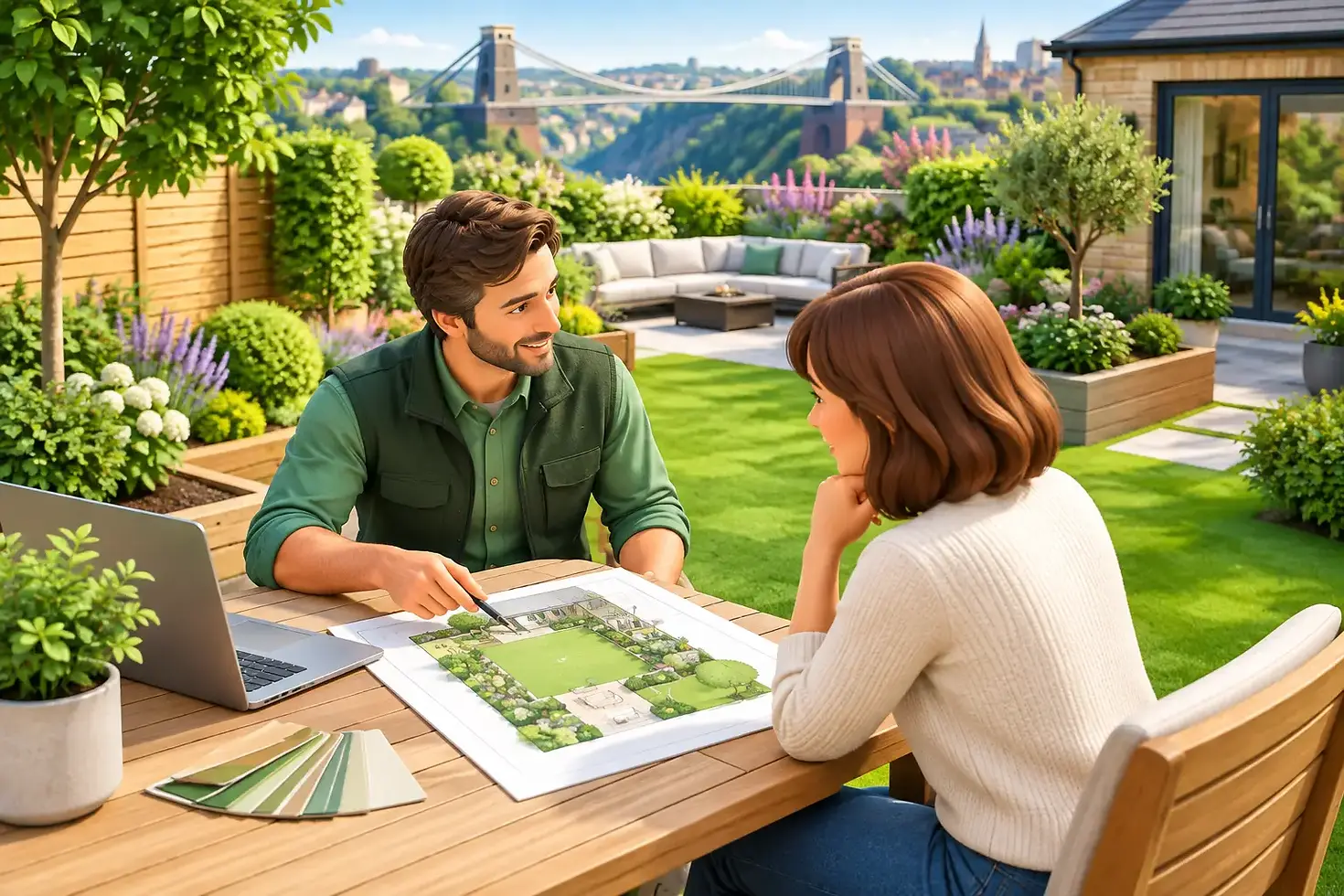
A proper consultation is a two-way conversation, supported by a close look at the garden itself. You should expect questions about your household, how often you use the space, your preferred style, maintenance expectations and priorities. The answers help turn a broad ambition such as make it more usable into a clear brief.
The site matters just as much. Levels, drainage, soil, sunlight, mature trees, access for materials and existing services can all affect the design and build. A garden that looks simple from the back door may need significant groundwork before new surfaces can be installed correctly. Identifying that early is reassuring, not discouraging. It allows the budget and programme to reflect the work required, rather than leaving surprises for halfway through construction.
Boundaries also deserve attention. Fencing, walls and screening influence privacy, security and the feeling of space. In an overlooked urban garden, carefully placed screening or a pergola can make a seating area feel more private without closing in the entire plot. In a more open setting, the priority may be shelter from prevailing wind and a better view across the garden.
A consultation should also look at the relationship between indoors and out. Your garden is an extension of your home, so sightlines from key rooms, door positions and the natural flow outside all count. Even a modest garden can feel much larger when the layout draws you out from the house with purpose.
Turning Ideas into a Buildable Garden Plan
Once the lifestyle brief and site conditions are clear, the next step is balancing ambition, function and investment. This is where experience makes a real difference. It is easy to create a wish list. It takes careful planning to decide what needs to happen first, what will bring the greatest everyday benefit and how every element will work together.
For example, porcelain paving offers a crisp, contemporary finish and is straightforward to keep clean, while natural stone brings variation and character that suits many period homes. Composite decking can be a practical choice for low-maintenance seating areas, whereas timber has a warmth that some homeowners strongly prefer. Neither is automatically right. The best choice depends on the character of the property, exposure to weather, desired upkeep and the wider design.
The same applies to lawns. Natural turf has a softness that is hard to replicate and can be ideal for family use, but it needs the right conditions and ongoing care. Artificial grass can provide a consistently neat surface in shaded or difficult spaces, although it will not deliver the same feel, biodiversity or cooling effect as a living lawn. A good consultation makes these trade-offs clear without pushing a one-size-fits-all answer.
Budget works best when it is discussed early
An open budget conversation is one of the most helpful parts of the process. It does not have to mean knowing the exact final figure before design work begins. It means being clear about the level of transformation you are considering and where quality matters most to you.
Groundworks, drainage and structure are the parts of a garden you may not see once the project is finished, but they are fundamental to a durable result. If choices need to be made, it is usually wiser to build the foundations and key surfaces properly, then phase a secondary feature or more extensive planting if needed. A garden can develop over time. Poor preparation is much harder to put right.
Questions Worth Asking During Your Consultation
A consultation should leave you feeling informed rather than overwhelmed. Ask how the layout will handle changes in level and rainwater, whether access will affect the build, and which materials suit the location and intended use. It is also worth discussing how much maintenance you genuinely want to take on, rather than what sounds appealing in theory.
For a larger transformation, ask who will manage the project from the first ideas through to construction. When design, landscaping and outdoor construction are handled as one joined-up process, decisions about patios, decking, planting, garden rooms, fencing and lighting can be coordinated from the start. That reduces the risk of a beautiful drawing becoming difficult or expensive to build.
You may also want to ask about timings, disruption and how the site will be managed while work is underway. Major garden improvements involve machinery, deliveries and skilled trades, especially where excavation or structural work is required. Clear expectations help the project feel organised from the outset.
From First Conversation to Something Worth Living In
The value of a garden consultation is not simply that it produces ideas. It gives those ideas direction. A neglected plot becomes an outdoor dining space with shelter and warmth. An uneven garden becomes a series of usable levels. A blank boundary becomes privacy, structure and a backdrop for planting.
At Garden Concept Creations, the aim is to listen closely before building properly. That means considering the creative details people notice immediately, alongside the groundwork and construction standards that let a garden stand up to everyday family life and British weather.
Your garden does not need to copy anyone else’s. It needs to make room for the way you live now, and the way you hope to live there next summer, next year and beyond. Start with the conversations that matter, and the space outside your back door can become somewhere you genuinely choose to spend time.


Comments